
Feature · The AfterLoss Case

The work after a death, grouped into five phases

An AfterLoss case is the umbrella for everything that follows a death: dozens of steps, organised into five phases, with statutory deadlines flagged and the order ultimately yours.

At a glance

Five phases, your order. First Days, Saying Goodbye, Letting People Know, Settling Affairs, Finding a New Normal. Statutory deadlines are flagged; you choose what to do today.

Start a case →

The situation

After a death, the work is bigger than any one step. There is the registration. There are the funeral arrangements. There are the bank accounts and the pensions and the council tax and the unused subscriptions and the will and the probate. Some of it has statutory deadlines (a death must be registered within five days in England and Wales) and the rest does not. Most families work through it in fragments: a phone call here, a form there, a list on the back of an envelope they keep losing.

What AfterLoss gives you

An AfterLoss case is the workspace that holds all of it. The work is grouped into five phases, named in plain English, with each phase containing the steps that belong together. Statutory deadlines are flagged on the dashboard so you know what needs doing in the next few days; everything else can wait until you have the energy. You can work through phases in order or skip ahead to whatever you can face today. The wiki has a fuller orientation guide on what to do when someone dies for context.

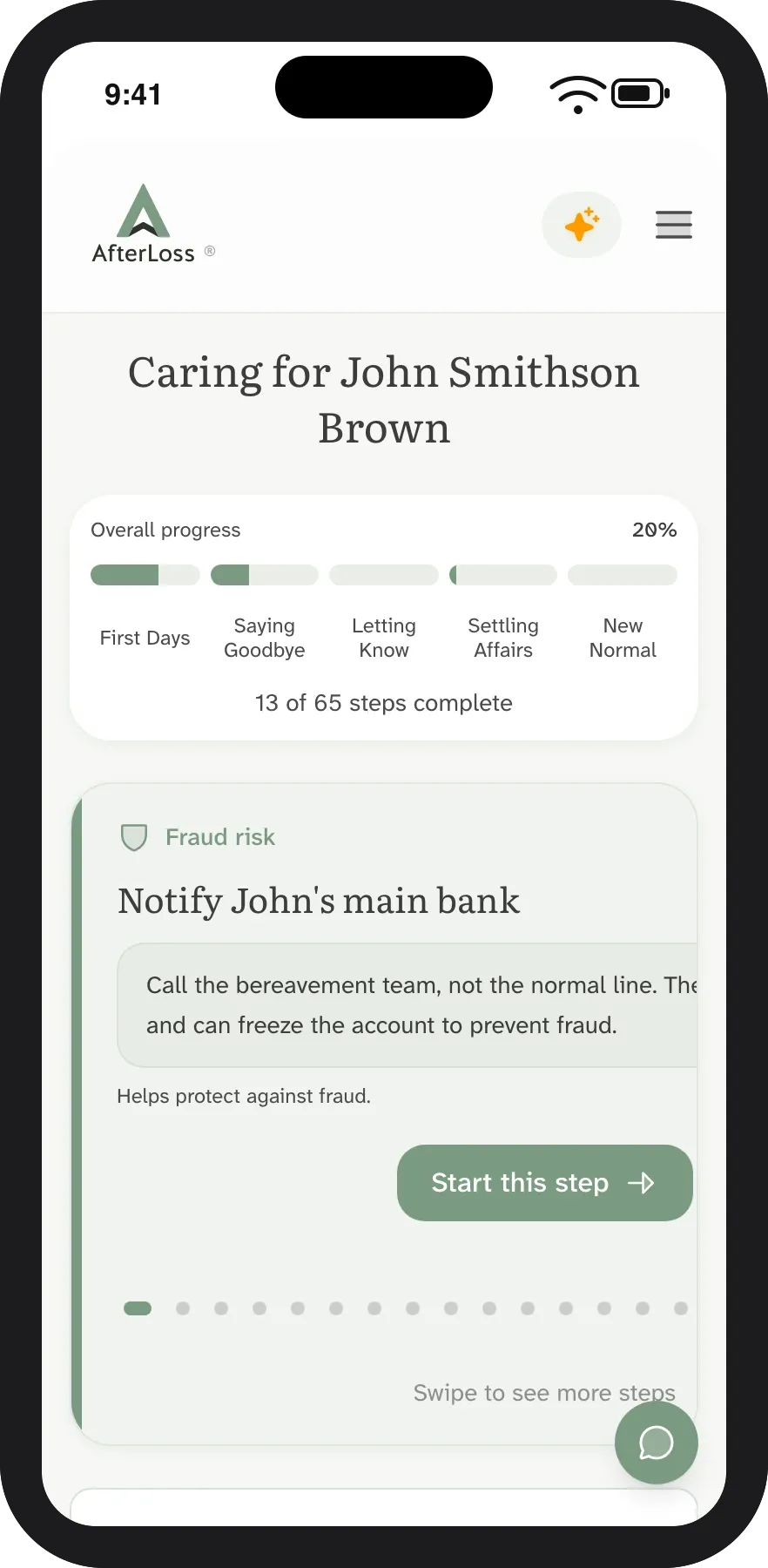
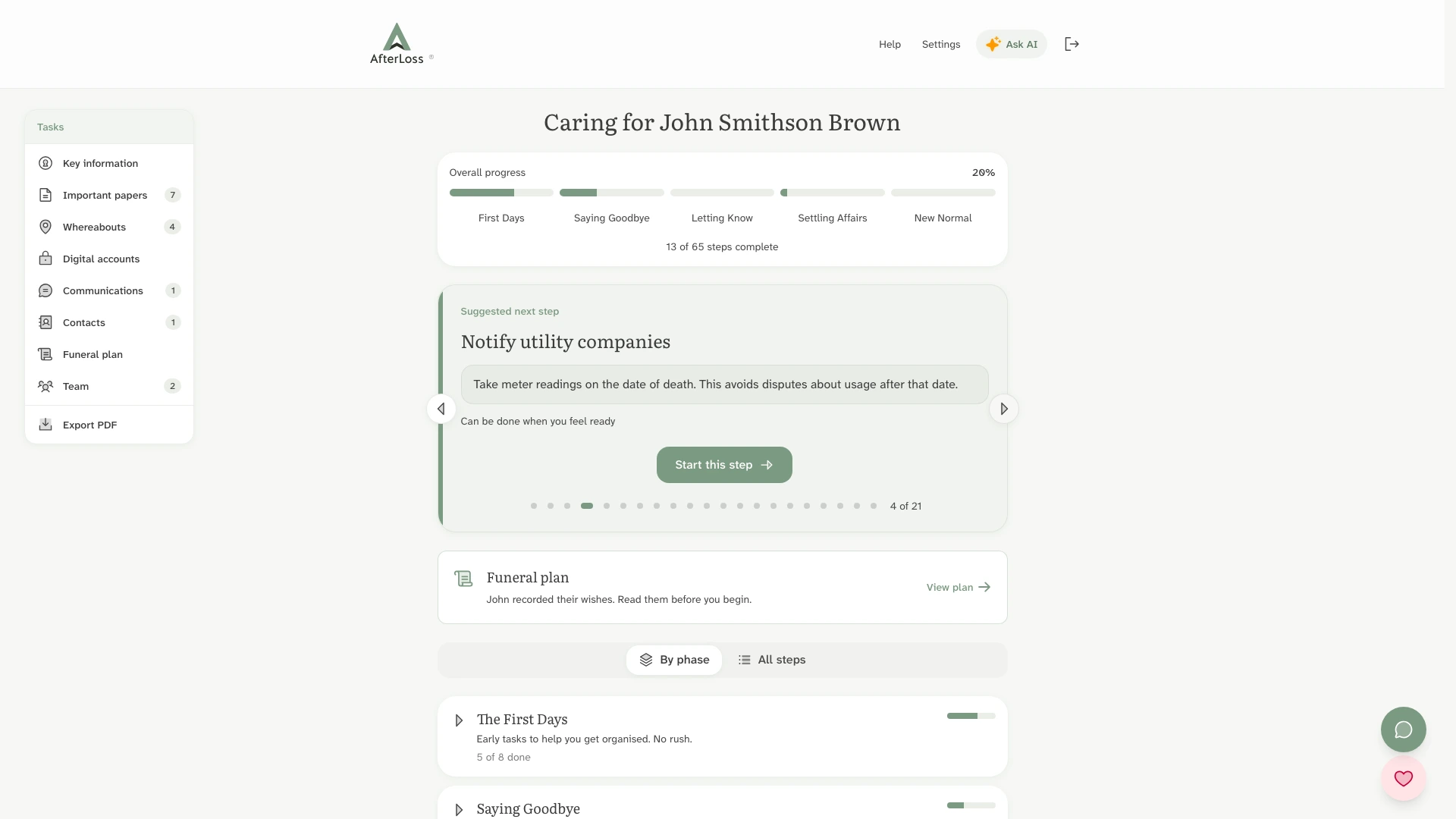
The AfterLoss case dashboard, showing the five phases of work and the steps tiered by urgency.
The case dashboard, with the five phases visible

Structure that helps you find your way through

Five phases that group the work

The First Days (registration, securing the home, finding the will). Saying Goodbye (funeral arrangements). Letting People Know (Tell Us Once, banks, employers). Settling Affairs (probate, pensions, property, tax). Finding a New Normal (subscriptions, memorialising digital accounts, closing the case). Each phase holds the steps that belong together; you move between them as it suits you.

Deadlines surfaced, order respected

Each step has a tier on the dashboard: Do now (overdue or with a statutory deadline), Do soon (important but flexible), Wait (blocked by an earlier step) and Do when ready (no time pressure). The tiers are guidance you can override. You can complete any step at any time; the tiers exist so you do not have to work out for yourself which day's letter you actually have to open.

How it fits

The case ties everything else together. Information and documents live alongside the steps; the team you have invited (see collaboration) sees the same dashboard. In planning mode the case is what the family eventually inherits. For the procedural detail behind any phase, the wiki covers each step: see, for example, how to register a death.

Open a case when you're ready

You can do as much or as little as you have time for.